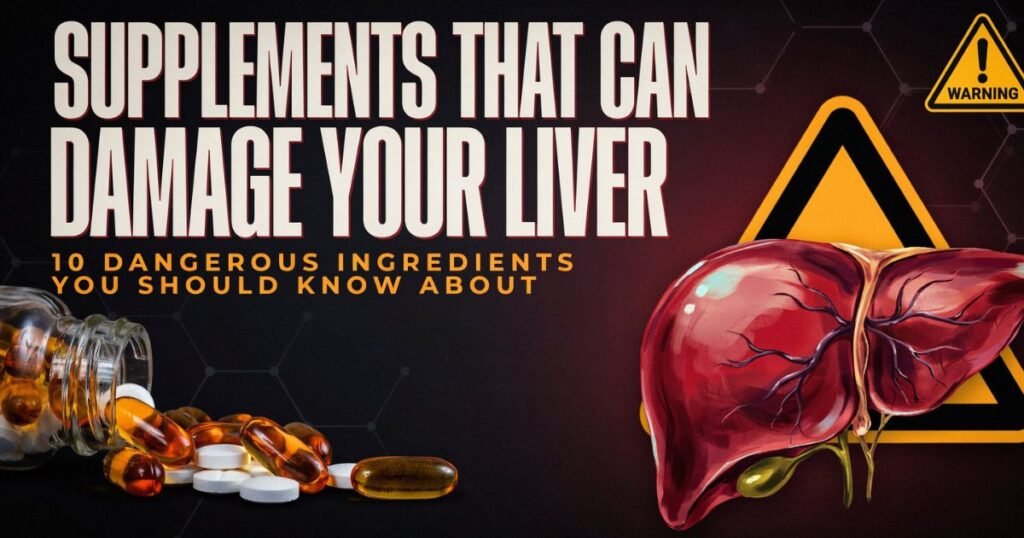
Many people believe vitamins and herbs are always safe because they are natural. That isn’t true. Some Supplements That Can Damage Your Liver may quietly affect liver health before warning signs appear. Since your liver processes almost every pill, powder, and capsule you take, the wrong product or dose can increase the risk of liver damage. Certain dietary supplements, including herbal extracts and high-dose vitamins, have been linked to serious liver problems in healthy adults.
In this guide, you’ll discover which supplements deserve extra caution, why they may harm your liver, and how to make smarter choices that support long-term wellness and overall health.
10 Popular Supplements That Can Damage Your Liver
Many products promoted for weight loss, better immunity, stress relief, or fitness have been linked to liver problems. Although not everyone who uses them develops complications, experts recommend caution. The risk usually depends on dosage, product quality, your medical history, and how long you take the supplement. Several cases of Drug-Induced Liver Injury have been connected to Herbal and Dietary Supplements, making careful supplement selection more important than ever.
Below are ten supplements that researchers and healthcare professionals have associated with Liver Injury. Always remember that these products may affect people differently. Before adding any supplement to your routine, speak with a Healthcare Provider or Registered Dietitian, especially if you already have liver disease or take prescription medication.
| Supplement | Possible Liver Risk | Safer Alternative |
|---|---|---|
| Green Tea Extract | High EGCG doses may increase Liver Enzymes | Brewed green tea |
| High-Dose Vitamin A | Long-term toxicity may cause Fatty Liver, Fibrosis, and Cirrhosis | Vitamin A from foods |
| Turmeric Extract with Black Pepper | Piperine increases Curcumin absorption, raising toxicity risk | Culinary turmeric |
| Ashwagandha | Rare reports of severe Liver Toxicity | Stress management through sleep and exercise |
| Kava | Linked to severe liver injury | Chamomile tea |
| Black Cohosh | Rare liver inflammation cases | Lifestyle support for menopause |
| Red Yeast Rice | May affect liver similarly to statins | Heart-healthy diet |
| Bodybuilding Supplements | Hidden anabolic steroids may damage the liver | Balanced nutrition |
| High-Dose Niacin | Excessive doses can injure liver cells | Doctor-approved dosage |
| Multi-Herb Weight Loss Products | Unknown ingredient combinations increase risk | Food-first weight management |
Green Tea Extract
Unlike regular tea, Green Tea Extract contains concentrated EGCG (Epigallocatechin-3-Gallate). Research suggests that consuming more than the European Food Safety Authority guideline of approximately 800 mg EGCG daily may increase Liver Enzymes. If you enjoy green tea for antioxidants, drinking brewed tea is generally considered a safer option than taking concentrated capsules.
High-Dose Vitamin A
Vitamin A supports vision and immunity, but too much becomes harmful because it is stored in body fat instead of being removed quickly. Long-term intake above 3,000 mcg RAE or 10,000 IU Vitamin A daily may contribute to Vitamin A Toxicity, Fatty Liver, Fibrosis, and eventually Cirrhosis. Most people can meet their needs through colorful vegetables, dairy products, and eggs.
Turmeric Extract with Black Pepper
Cooking with turmeric is very different from taking concentrated supplements. Many products combine Turmeric Extract with Black Pepper because Piperine greatly increases Curcumin absorption. While this may improve effectiveness, it may also raise the chance of Acute Liver Failure in rare cases reported by the Drug-Induced Liver Injury Network. Using turmeric as a cooking spice is usually the safer choice.
Ashwagandha
Many people take Ashwagandha as one of the most popular Stress Relief Supplements or Sleep Support Supplements. Although most users experience no problems, medical reports have linked high-dose preparations to liver injury in some individuals. Warning signs include Dark Urine, Yellow Skin, Yellow Eyes, fatigue, and nausea. Anyone experiencing these symptoms should stop the supplement immediately and seek medical advice.
Other High-Risk Supplements
Other supplements have also raised safety concerns. Kava has been associated with severe liver injury in several countries. Black cohosh has occasionally been linked with liver inflammation. Some bodybuilding supplements contain hidden steroids, while certain weight-loss products mix multiple herbs without proper testing. These combinations increase uncertainty and make supplement safety much harder to guarante
Signs and Symptoms of Liver Damage From Supplements
Your liver often stays silent in the early stages of injury. That means you may not notice a problem until significant liver damage has already developed. Paying attention to early symptoms can help you stop the supplement quickly and receive treatment before the condition becomes more serious. Doctors often recommend blood tests if symptoms appear after starting a new supplement.
As liver injury progresses, symptoms usually become stronger and more noticeable. Some people only experience mild tiredness, while others develop severe illness that requires hospital care. Never ignore warning signs, especially if you recently started new dietary supplements or increased your dosage.
| Early Symptoms | Severe Symptoms |
|---|---|
| Fatigue | Jaundice (yellow skin or eyes) |
| Nausea | Severe abdominal pain |
| Loss of appetite | Persistent vomiting |
| Mild stomach discomfort | Dark urine |
| Itchy skin | Pale-colored stools |
| Feeling weak | Swelling of the abdomen |
When Should You See a Doctor?
Contact a healthcare professional immediately if you notice dark urine, yellow eyes, yellow skin, severe stomach pain, or unusual tiredness after taking supplements. Early diagnosis improves recovery and helps prevent liver failure or long-term complications.
Who Is Most at Risk of Supplement-Related Liver Injury?
Anyone can develop supplement-related liver problems, but some people face a much higher risk. Individuals with existing liver disease, older adults, and people taking several medicines at the same time should be especially careful. Combining multiple products increases the chance of medication interactions and supplement toxicity, making it harder for the liver to process everything safely.
Lifestyle also matters. Regular alcohol use, poor nutrition, and taking supplements without medical advice place extra stress on the liver. Athletes using bodybuilding products or people trying rapid weight loss often consume high doses without realizing the possible consequences. Choosing safe supplements and following professional advice can greatly reduce these risks.
| High-Risk Group | Reason |
|---|---|
| People with liver disease | Reduced liver function |
| Older adults | Slower metabolism |
| Heavy alcohol users | Additional liver stress |
| People taking multiple medicines | Greater interaction risk |
| Bodybuilders | High-dose supplement use |
| Weight-loss supplement users | Multi-ingredient products |
| Pregnant women | Extra medical precautions needed |
How Doctors Diagnose Liver Damage Caused by Supplements
Diagnosing supplement-related liver injury starts with a detailed medical history. Your doctor will ask which supplements you take, when you started them, and how much you use every day. This information helps identify whether a specific product may be responsible. Honest answers are important because many people forget to mention herbal products during medical visits.
Doctors usually confirm the diagnosis through laboratory testing and imaging. Blood work measures liver enzyme levels, while ultrasound or other scans help rule out different causes of liver disease. In rare situations, specialists may recommend additional testing if symptoms continue after stopping the supplement.
| Diagnostic Test | Purpose |
|---|---|
| Blood tests | Measure liver enzymes and liver function |
| Medical history | Identify supplement use |
| Ultrasound | Check liver structure |
| CT or MRI scan | Detect serious damage |
| Liver biopsy (rare) | Confirm difficult cases |
Why Blood Tests Matter
Routine blood tests often detect liver injury before severe symptoms appear. Monitoring liver enzyme levels allows doctors to identify problems early, stop the harmful supplement, and prevent permanent liver damage.
Can Liver Damage From Supplements Be Reversed?
The good news is that many cases of supplement-related liver injury improve when the harmful product is stopped early. Your liver has an impressive ability to repair itself. Mild liver inflammation often disappears within weeks or months if you avoid the supplement and follow your doctor’s treatment plan. Early action makes a significant difference in protecting long-term liver health.
However, severe injury may leave permanent scars. If damage progresses to liver fibrosis, liver cirrhosis, or liver failure, complete recovery becomes much harder. In rare cases, patients with Acute Liver Failure may even require a Liver Transplant. This is why recognizing symptoms early and seeking medical care immediately is so important.
| Severity | Recovery Outlook |
|---|---|
| Mild liver irritation | Usually reversible after stopping supplements |
| Moderate liver injury | May require medical treatment and monitoring |
| Liver fibrosis | Partial recovery is possible |
| Liver cirrhosis | Often permanent but manageable |
| Acute liver failure | Emergency treatment or transplant may be needed |
Recovery Depends on Early Treatment
The sooner harmful supplements are discontinued, the better your recovery chances become. Regular blood tests help doctors monitor healing and confirm that liver function is returning to normal.
How to Choose Safe Supplements Without Harming Your Liver
Choosing the right supplement begins with careful research rather than clever advertising. Always read supplement labels, check ingredient lists, and avoid products promising unrealistic results. A food-first approach remains the safest strategy because whole foods provide vitamins and minerals naturally without exposing your liver to concentrated extracts.
Quality matters just as much as ingredients. Choose third-party tested supplements certified by NSF International, USP Verified, or Informed Sport whenever possible. These certifications improve supplement quality by confirming that products contain the listed ingredients and are free from many harmful contaminants.
| Safety Tip | Why It Helps |
|---|---|
| Read ingredient labels | Avoid hidden ingredients |
| Buy third-party tested products | Better quality control |
| Avoid mega doses | Lower toxicity risk |
| Speak with a healthcare provider | Prevent interactions |
| Use supplements only if needed | Reduce unnecessary exposure |
| Prioritize healthy food | Supports natural nutrition |
Safe Alternatives to High-Risk Supplements
Many health goals can be achieved without relying on concentrated herbal products. Instead of high-dose extracts, focus on healthy eating, regular exercise, and balanced nutrition. A colorful diet naturally provides vitamins and minerals that support immunity, energy, and overall health while reducing the need for unnecessary supplementation.
Simple lifestyle habits also protect your liver. Drinking enough water, limiting alcohol, maintaining a healthy weight, and eating antioxidant-rich foods support liver protection naturally. If you truly need supplements because of a confirmed deficiency, choose evidence-based products recommended by a Registered Dietitian or physician.
| Instead of This | Consider This |
|---|---|
| Green Tea Extract | Fresh green tea |
| High-dose Vitamin A | Carrots, spinach, eggs |
| Turmeric capsules | Turmeric used in cooking |
| Multiple herbal blends | Balanced diet |
| Weight-loss supplements | Healthy nutrition and exercise |
Food Is Usually the Best Medicine
For most healthy adults, nutritious meals provide everything the body needs. Supplements should fill genuine deficiencies, not replace a balanced diet or healthy lifestyle.
Tips to Protect Your Liver While Taking Supplements
Protecting your liver doesn’t mean avoiding every supplement. It means using them wisely. Only take products when there is a clear health reason, and always follow the recommended dosage. Combining many supplements without professional advice increases unnecessary risk and may affect liver metabolism.
Keep your healthcare provider informed about every vitamin, herb, or powder you use. Regular medical checkups and occasional blood tests help identify problems before symptoms appear. Small precautions today can prevent major liver complications in the future and support lifelong healthy lifestyle habits.
| Healthy Habit | Benefit |
|---|---|
| Follow recommended dosage | Prevent overdose |
| Avoid mixing many supplements | Lower interaction risk |
| Schedule routine blood tests | Monitor liver health |
| Eat a balanced diet | Supports liver function |
| Stay physically active | Improves overall wellness |
| Limit alcohol intake | Reduces liver stress |
Conclusion
Choosing supplements wisely is one of the best ways to protect your liver. While many products are helpful when used correctly, several Supplements That Can Damage Your Liver have been connected to liver damage, Liver Toxicity, and even Acute Liver Failure. The safest strategy is to focus on healthy nutrition, follow recommended dosages, buy high-quality products, and consult a qualified healthcare professional before starting any new supplement. Your liver works every day to keep your body healthy. Treat it with the same care by making informed, evidence-based decisions instead of relying on marketing claims alone.
FAQ’S
What are the 10 worst medications for your liver?
Some medicines that may affect the liver include high-dose acetaminophen (paracetamol), certain antibiotics, statins, antifungal drugs, anti-seizure medicines, methotrexate, amiodarone, isoniazid, some chemotherapy drugs, and anabolic steroids. Always take them only as prescribed.
What are the best supplements to take for liver damage?
Don’t self-treat liver damage with supplements. If your doctor recommends them, only use evidence-based and third-party tested products after proper blood tests and medical evaluation.
Which vitamin is not good for the liver?
High-dose Vitamin A can become toxic and may increase the risk of liver damage if taken above the recommended amount for a long time.
What are the three worst things for your liver?
Heavy alcohol use, taking unsafe or excessive supplements, and using medications above the recommended dose are among the biggest causes of liver damage.
What heals the liver the fastest?
The liver heals best when the harmful cause is removed. Eat a balanced diet, stay hydrated, avoid alcohol, maintain a healthy weight, and follow your doctor’s treatment plan.